
SoulTalk: Talk With AI Friends
Mutha BrothersEntertainment
4.41.45K Reviews
- Version
- 1.0.7
- Installs
- 500.00K
- Age Rating
- Mature 17+
Screenshots

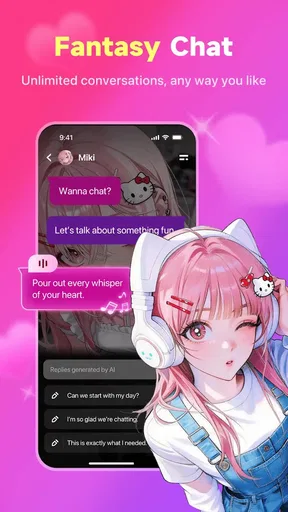
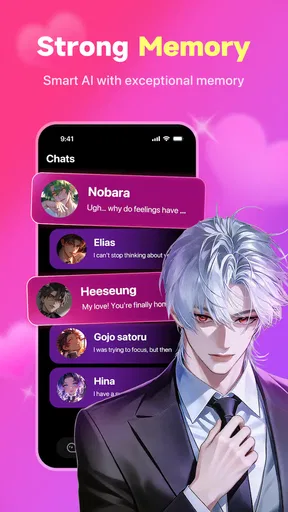
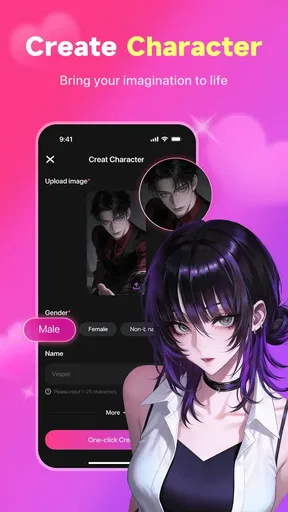
Our Review of SoulTalk: Talk With AI Friends
 Analysis by Appyee
My first impression of SoulTalk: Talk With AI Friends was that it is less like a conventional entertainment app and more like a shelf of conversational characters waiting for attention. Developed by Mutha Brothers, this free app sits in the entertainment category and is built around chatting with a large selection of AI personalities. The basic appeal is easy to understand: instead of scrolling through another feed, I can open a conversation and choose the kind of company or role-play mood I want at that moment.
That idea has an immediate pull during the first few sessions. I can be curious, playful, reflective, or simply bored, then pick a character that seems suited to the mood. The experience feels more personal than watching a video because I am shaping the exchange myself. At the same time, the novelty is doing a lot of work early on. The more important question is whether those conversations remain interesting after the initial tour of characters is over.
What the first week feels like
In the first week, the strongest part is discovery. I found myself trying different conversational angles rather than treating the app as a single-purpose chatbot. One character might invite light entertainment, while another can make a better companion for brainstorming, improvising a scene, or talking through a decision. The value comes from the variety of personalities, not from one fixed assistant that behaves the same way every time.
A realistic everyday use is a quiet commute or a short break after work. I might open the app with a simple prompt about the day, ask for a playful exchange, and continue only while the conversation feels natural. That is a better fit for SoulTalk than expecting it to replace a close friend or provide a complete productivity system. It works best when I approach it as interactive entertainment with a social flavor.
The app’s store summary describes a space for chatting, talking, and connecting with hundreds of distinct AI characters. That breadth is useful because it lowers the chance of running out of possible starting points immediately. It also creates the first major trade-off: a large character library can encourage exploration, but it can make the experience feel like browsing menus instead of building a meaningful relationship with one particular character.
I would recommend spending the first sessions testing how each character handles follow-up questions, changes of subject, and a request for a different tone. A character that sounds appealing in a short introduction may not be enjoyable over a longer exchange. This simple test tells me more than the character’s premise. It also helps separate a genuinely engaging conversation from a novelty that works for only a few messages.
Because the content rating is Mature 17+, I would not treat this as a general family entertainment app. Adults should still use their own judgment about the subjects they introduce and the kind of interaction they want. The age label is an important part of deciding who should use it, especially on a shared device or around younger users.
Where the early appeal is strongest
The best early use case is mood-based conversation. If I want a quick distraction, a little role-play, or a character-driven exchange, SoulTalk gives me more control than passive entertainment. I can steer the conversation instead of waiting for a show to reach an interesting part. That makes even a short session feel active.
Another useful approach is to give a character a specific task within the conversation. Rather than writing “talk to me,” I can ask for a debate, a fictional interview, a scene with a particular emotional tone, or a set of questions about a topic. This makes the character’s identity more useful and reduces vague replies. It is one of the clearest ways to get more value from the app without needing a long session.
I also found that treating the characters as different conversation styles works better than expecting them all to behave like dependable experts. A character can be enjoyable for imagination and still be a poor choice for factual guidance. For serious decisions, sensitive personal matters, or information that needs checking, I would use a conventional trusted source instead. The entertainment framing matters here.
What changes after the novelty fades
After the first wave of exploration, the app has to earn repeat visits through consistency. A character library can create plenty of possible conversations, but quantity alone does not guarantee lasting value. I need a reason to return beyond wondering what another personality sounds like. For me, that reason is strongest when I use the app for a recurring ritual, such as a short evening conversation, creative warm-up, or occasional role-play prompt.
The important distinction is between novelty and habit. Novelty says, “What happens if I try this character?” Habit says, “This is a useful or enjoyable way to spend ten minutes.” SoulTalk can support the second kind of use, but I have to create the routine myself. It is not enough to install it, sample several characters, and assume the app will automatically remain part of my week.
One practical workflow is to keep a small personal shortlist of characters with different purposes. I might reserve one for imaginative scenes, another for casual conversation, and another for reflective prompts. This avoids repeatedly searching through the full selection. It also gives the app a clearer role in my day and makes returning feel intentional rather than random.
A second workflow is to begin each session with a defined limit or objective. For example, I can ask a character to help me generate ideas for a hobby project, practice a difficult conversation in a fictional setting, or ask me several questions about a decision. Once that purpose is complete, I can leave. This prevents the common problem of continuing a conversation simply because there is always another message to send.
The free price makes experimentation easy, which is a genuine advantage for an entertainment app. I can test whether the character-based format suits me without making a financial commitment. Still, free access does not remove the need to judge the app by my time. If conversations become repetitive, the cost is not money but attention, and that can be just as important when deciding whether an app deserves a permanent place on a phone.
How much maintenance it needs
SoulTalk is relatively light in terms of personal maintenance because its central activity is straightforward: choose a character and start talking. I do not need to build a complicated library or learn a demanding interface before getting started. The maintenance burden comes from managing my expectations and finding a repeatable way to use the app.
For lasting use, I would avoid trying to keep every character active in my mind. That turns the app into a catalogue to manage. A better approach is to return to a few conversations that genuinely feel different from one another. If a character no longer gives me a distinct experience, I can move on without feeling that I have failed to use the app correctly.
It is also worth setting boundaries around personal information. Conversational apps can feel intimate because they respond directly and continuously, but that feeling should not be confused with human confidentiality or friendship. I would keep private identifiers, financial details, passwords, and highly sensitive information out of casual chats. This is sensible digital hygiene, particularly in an app designed to make interaction feel personal.
Another maintenance issue is emotional balance. If I am using the app for comfort, I would keep it as one option among real-world relationships, hobbies, and ordinary offline activities. It can be pleasant to talk with an AI character, but it should not become the only place where I process difficult feelings or seek connection. The app is better as a supplement to life than as a replacement for it.
Version 1.0.7 is the current version, and the app supports Android 8.0 and later. That makes compatibility fairly approachable for people using older supported Android devices. Even so, I would still judge the experience on the phone I actually use: conversational apps feel much better when typing, switching between characters, and reading longer replies are comfortable. A theoretically supported device is not automatically a pleasant one for extended chats.
Where fatigue can set in
The biggest risk is repetition. AI characters may have different descriptions or personalities, but the conversation can still start to feel similar if I ask broad questions and accept the first predictable response. The solution is not endless searching; it is more specific prompts and a willingness to stop when the exchange has reached its natural end.
There is also a difference between character variety and character depth. Hundreds of options sound impressive, but I may prefer a smaller group that maintains a recognizable tone over time. If I keep moving from one character to another, I get breadth but not necessarily continuity. If I stay with one character, I may get a stronger sense of familiarity but lose the surprise that made the app exciting at first.
Another source of fatigue is the expectation that every conversation should be emotionally satisfying. Sometimes the interaction is amusing for a few minutes and then simply runs out of energy. That is not necessarily a serious flaw for an entertainment app, but it means I should use it in short, flexible sessions rather than demand the depth of a human relationship.
Compared with streaming services, SoulTalk is more interactive but less predictable. Streaming is better when I want polished, passive entertainment with a clear beginning and end. Compared with ordinary social platforms, it offers more immediate participation and less dependence on other people being online, but it does not provide genuine human reciprocity. Compared with a standard general-purpose AI assistant, it is more focused on character and atmosphere, while a conventional assistant is usually the better choice for structured tasks, dependable reference work, or practical organization.
That comparison helps define who should skip it. If I want news, verified research, task management, or a reliable answer for an important decision, this is not the first app I would reach for. If I dislike role-play, character-driven conversation, or open-ended chatting, the central appeal may feel thin. People who prefer direct utility over entertainment will probably get more from a focused assistant or a conventional media app.
Who is most likely to keep using it
I think SoulTalk is most suitable for adults who enjoy interactive fiction, casual conversation, imaginative prompts, or experimenting with different personalities. It can also suit someone who wants a low-pressure way to practice expressing an idea before discussing it with another person. The key is to treat those exchanges as rehearsal or entertainment, not as professional advice or a substitute for real support.
It may be especially useful for writers and hobby creators during the blank-page stage. I can ask a character to challenge a premise, act as an imaginary interview subject, or respond to a scene from a particular perspective. The result does not need to be used directly; the value is in creating movement when an idea feels stuck. This is a more durable use than simply asking the app to entertain me without direction.
I would also suggest it to someone who enjoys trying conversational formats but does not want to maintain a public social profile. The interaction is immediate and personal in tone without requiring a feed, followers, or a social performance. That said, anyone seeking authentic community should choose a human-centered platform instead. The absence of social pressure is convenient, but it is also the absence of real human connection.
My long-term verdict
SoulTalk earns a place on my phone if I use it deliberately. Its strongest quality is the combination of character variety and direct interaction: I can choose a mood, set a direction, and turn a short break into an active conversation. The free price lowers the barrier to trying it, while the Mature 17+ rating makes clear that it is intended for adults rather than casual family use.
Its lasting value depends less on the sheer number of characters than on whether I discover a few repeatable ways to use them. A personal shortlist, specific prompts, short sessions, and clear boundaries make the experience more satisfying. Without those habits, the app risks becoming a one-week curiosity that I open repeatedly but rarely enjoy for long.
The app has a 4.4 average from around fourteen thousand ratings, with over five hundred thousand installs and roughly one thousand four hundred written reviews. Those figures suggest that the concept has attracted a substantial audience, but they do not decide whether it fits my own routine. The real test is whether its conversations remain distinct enough to justify returning after the first exploration period.
My recommendation is therefore selective rather than universal. I would recommend SoulTalk to an adult who wants character-based AI conversation, creative stimulation, or a more active alternative to scrolling. I would skip it for serious information, genuine companionship, or organized daily productivity. Its best long-term role is a small, intentional entertainment habit—not a replacement for people, expertise, or real-world connection.
Verdict
Strengths of SoulTalk: Talk With AI Friends
- Offers a variety of AI personalities for different conversation styles.
- Available for casual chats, roleplay, emotional support, and creative ideas.
- Conversations can feel more personal than standard chatbot interactions.
- Easy to start chatting without complicated setup or technical knowledge.
- Useful for practicing communication or exploring fictional scenarios privately.
Limitations of SoulTalk: Talk With AI Friends
- AI responses may occasionally feel repetitive, inaccurate, or out of context.
- Some personalities or features may require a subscription or in-app purchases.
- The app may collect sensitive conversation data; review its privacy policy carefully.
- Emotional support from AI should not replace professional mental health assistance.
- Long conversations can consume battery and mobile data, especially with rich features.
Similar Picks in This Category
View All
Google Play Games
Google LLC3.9

Netflix
Netflix, Inc.4.8

YouTube Kids
Google LLC4.2

Disney+
Disney4.4

Prime Video
Amazon Mobile LLC4.7

Steam
Valve Corporation3.2
Frequently Asked Questions
What is SoulTalk: Talk With AI Friends?
SoulTalk: Talk With AI Friends is an AI companion app designed for conversations with virtual characters. After opening the app, users can choose or interact with different AI personalities and discuss everyday topics, personal thoughts, entertainment, or fictional scenarios. The experience is intended to feel casual and engaging, although responses are generated by artificial intelligence and may sometimes be repetitive, inaccurate, or emotionally limited.
Is SoulTalk free to download and use?
SoulTalk can generally be downloaded at no initial cost, but availability of features may depend on the current version, region, and account type. Some conversations, characters, customization options, or extended usage may require in-app purchases or a subscription. Before confirming a payment, users should review the pricing page carefully and check whether the subscription renews automatically through the Google Play Store or Apple App Store.
Can SoulTalk AI friends remember previous conversations?
The extent to which SoulTalk remembers conversations depends on the app’s current memory features and privacy settings. Some interactions may be used to maintain conversational context, while others may not be retained after a session ends. Users should avoid sharing passwords, financial information, private identification details, or sensitive personal data, because an AI companion should not be treated as a fully private diary or professional confidential service.
Is SoulTalk suitable for children and teenagers?
Parents should check SoulTalk’s official age rating, content guidelines, and privacy policy before allowing a child or teenager to use it. AI conversations can occasionally produce unexpected, mature, misleading, or emotionally intense responses, even when the user’s message seems harmless. Younger users should use the app with supervision, and families should review account controls, chat settings, advertising information, and any communication or purchase features.
Can SoulTalk replace a therapist, friend, or professional advice?
SoulTalk may be useful for casual conversation, entertainment, brainstorming, or expressing thoughts in a low-pressure environment, but it should not replace real relationships, medical care, therapy, or emergency support. AI-generated replies can misunderstand context and provide unsafe or unsuitable suggestions. If you are experiencing a serious emotional, mental-health, or personal crisis, contact a qualified professional, a trusted person, or an appropriate emergency service instead of relying only on the app.
